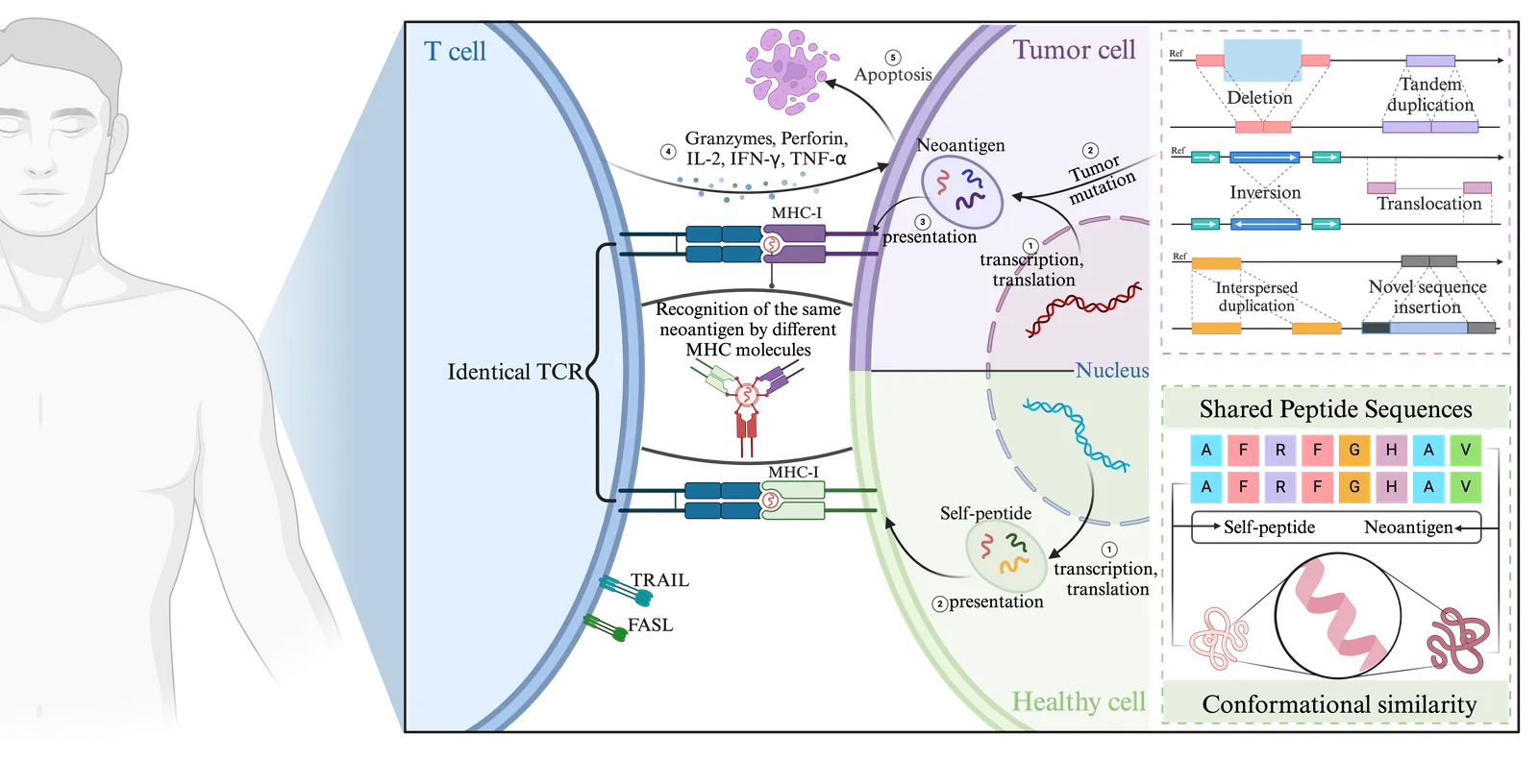
One TCR may recognize distinct peptide-MHC ligands when key sequence or structural features converge.
As illustrated here, a TCR selected to target a tumor neoantigen may also bind a self-peptide on healthy cells when peptide motifs or binding conformations are similar. This molecular mimicry can redirect T-cell activity toward unintended tissue recognition, making cross-reactivity a key concern for TCR engineering, immunotherapy safety, vaccine design, and off-target risk assessment.
Quick Start
Search datasets, explore networks, download releases, and review database statistics.
Step 01
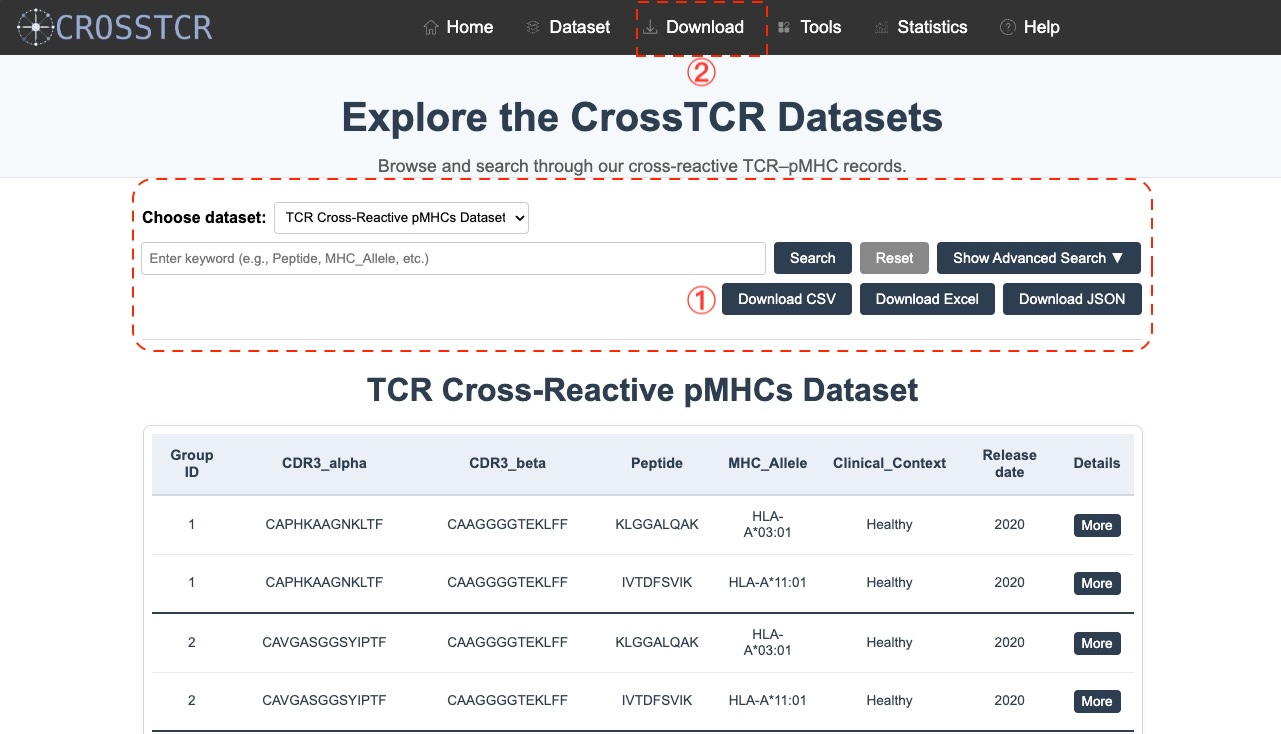
Search curated records
Enter antigens, TCR sequences, MHC alleles, or related keywords.
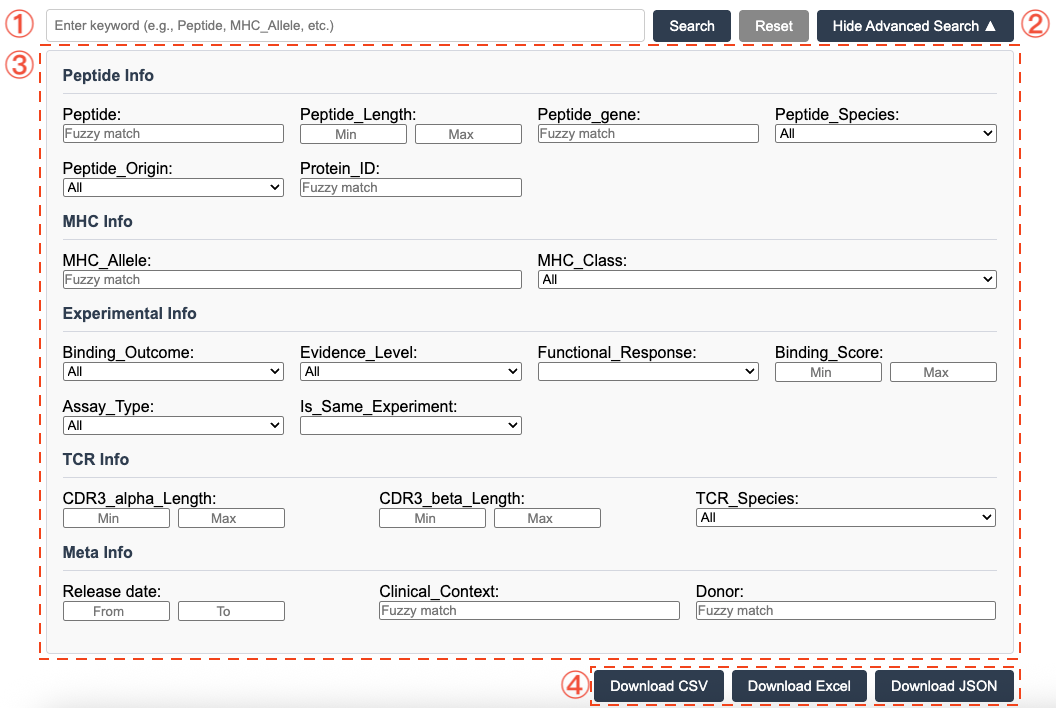
Open advanced filters to narrow by pMHC, TCR, evidence, or clinical context.
Export query results for downstream analysis.
Step 02
Compare analysis tools
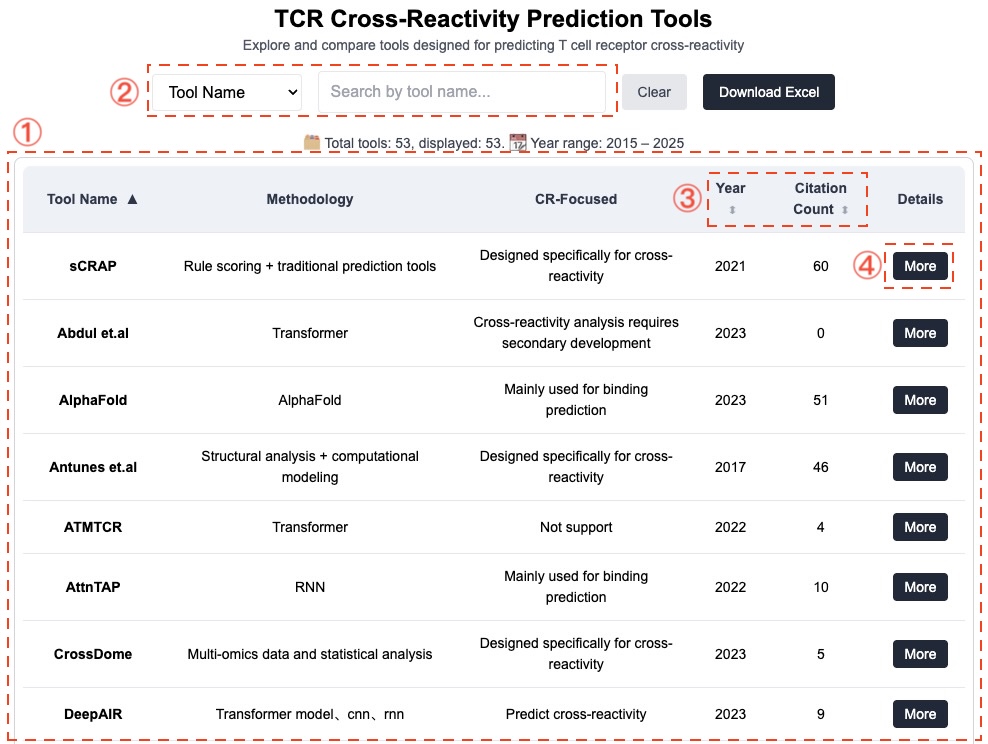
Browse cross-reactivity prediction tools with searchable metadata.
Sort by year, citations, model type, or input features.
Open detailed descriptions and external links for each tool.
Step 03
Download release assets
Download current versioned XLSX and JSON release files.
Access archived tables for reproducible analysis.
Use release notes to track database updates.
Step 04
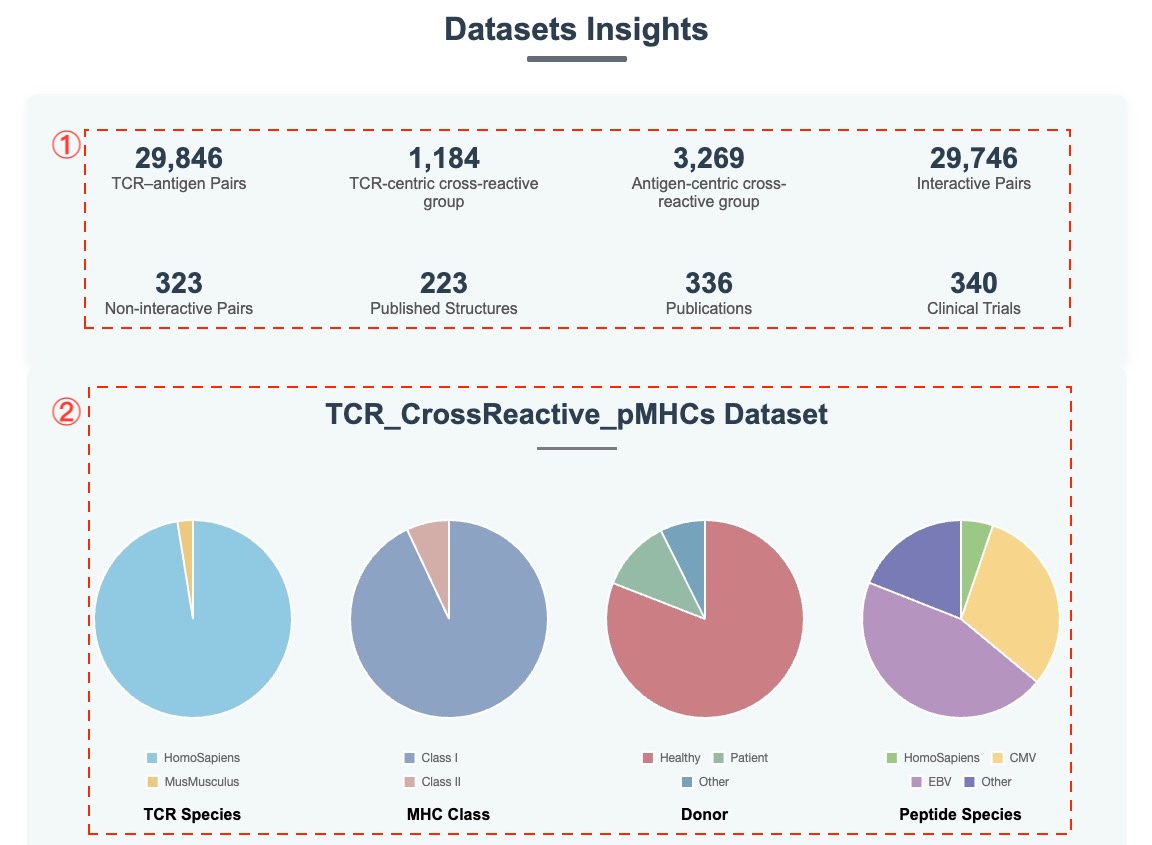
Review database statistics
Inspect dataset composition and source distributions.
Use visual summaries to understand coverage across records.
Compare high-level metrics before deeper exploration.
Glossary
TCR info
TCR sequence, chain usage, CDR3 lengths, and species metadata.
Sequences
Gene usage
pMHC info
Presented peptide, MHC restriction, source protein, origin, and similarity features.
Presented peptide
MHC restriction
Source protein
Experimental evidence
Experimental readouts supporting TCR-pMHC recognition or response.
Meta / source info
Record identity, clinical context, provenance, source material, and structure references.
Select a field
Field definitions will appear here without changing the card heights.
The fuzzy search feature allows users to input partial or approximate keywords into
the search box, automatically retrieving matches that closely correspond to the entered terms. This
functionality enhances user experience by simplifying the identification of relevant datasets.
How can I download data from the database?
Users can export query results in Excel or CSV formats by selecting the “Download”
button available on the search results page. The complete dataset can also be downloaded on the
"Download" page.
How often is the database updated?
We update quarterly with curated new entries and improvements based on user
feedback.
What should I do if I identify an error or discrepancy in the data?
Users who identify errors or inconsistencies are encouraged to report their findings
directly through the contact email provided at the bottom of the webpage. All reported issues will be
reviewed and corrected promptly during the subsequent update cycle.
Who can I contact for collaboration?
Feel free to email xielu[at]sibpt.com. We welcome academic and clinical
collaboration.
Contact Us
We strive to maintain the accuracy and availability of the database. However, issues may occasionally arise.
We greatly appreciate users’ feedback, suggestions, and participation in helping us improve and maintain
the quality of this resource. All inquiries or correspondence should be sent to:
Lu Xie, Ph.D.
Principal Investigator, Professor
Deputy Director of the IGB, SIBPT
Head of the Bioinformatics Research Group
Wenzhen Li
Ph.D. student of Fudan University
First author of the Cross-Reactivity Database
Email: bioinfowenz[at]gmail.com
Shanghai Institute of Biopharmaceutical TechnologyShanghai, China · 31.132937, 121.432638

 Home
Home Dataset
 Network
 Download
 Tools
Tools Statistics
 Help
Help